1
Answer a card
Recall the answer before revealing it. That effort is part of what strengthens the memory.
AlgoApp schedules flashcards according to what you know, how you answer, and when a memory is likely to need reinforcement.

Spaced repetition places more time between successful reviews and brings difficult material back sooner.
Recall the answer before revealing it. That effort is part of what strengthens the memory.
Choose Fail, Hard, Good, or Easy based on how well you remembered.
The scheduler updates the card's memory state and chooses an appropriate next review date.
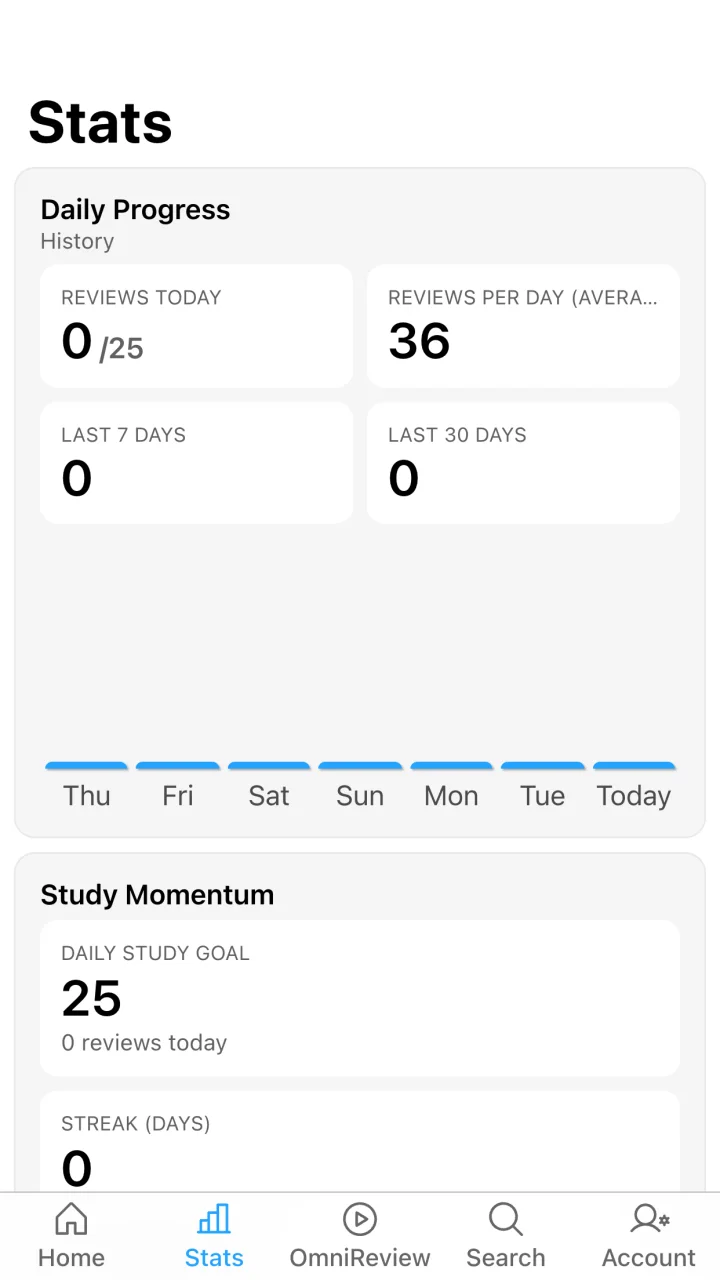
Set a daily study goal, track momentum and streaks, inspect review history, and use estimated completion charts for FSRS decks and folders. Forecasts adapt to your material and pace.
A deck's FSRS retention setting lets you balance how strongly you want to remember against how much review time you want to spend.
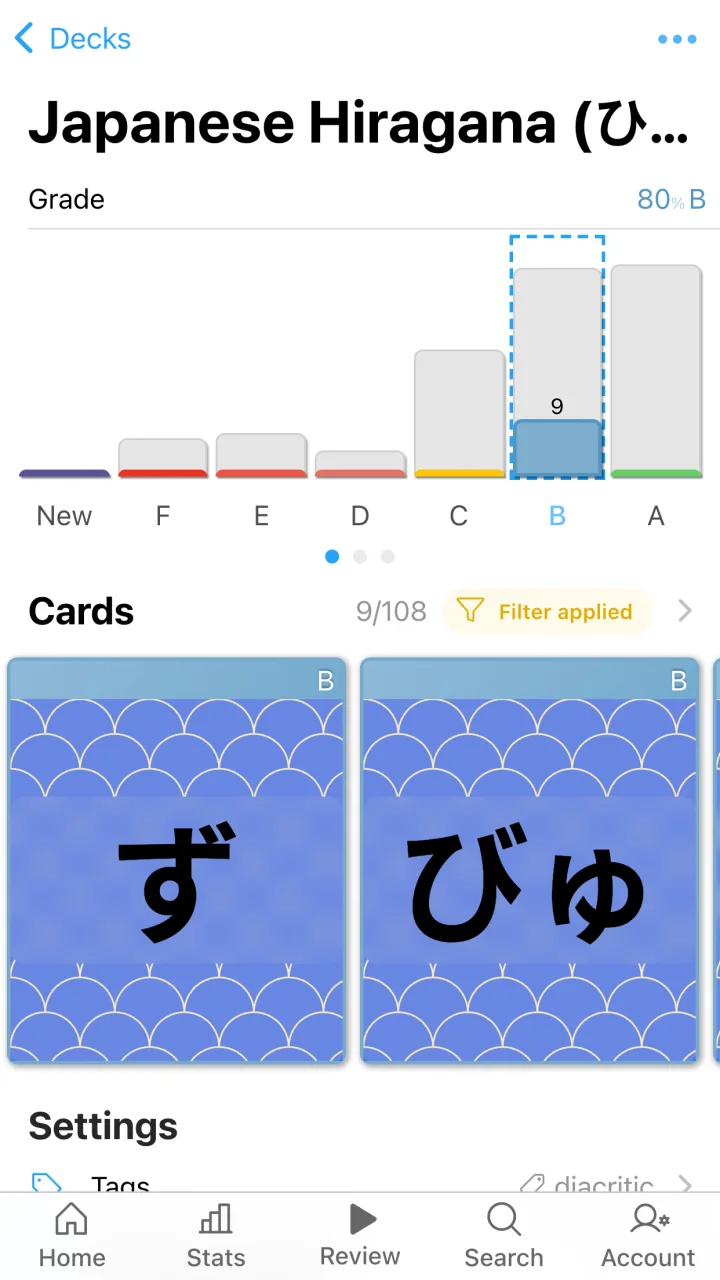
Study one deck, a folder, or material across your library with OmniReview. Use tags, grades, and due filters when you need a focused session.
A fixed rotation treats an easy definition and a stubborn concept the same. FSRS does not. It models each card separately so easy material can wait while difficult material returns sooner.
FSRS stands for Free Spaced Repetition Scheduler. In AlgoApp, FSRS is a review mode that selects and schedules cards intelligently using their review history and your ratings.
Fail, Hard, Good, and Easy tell the scheduler how recall felt. Honest ratings help the next interval match your memory. The goal is not to collect perfect scores; it is to build durable recall efficiently.
Cards you create manually, import, generate with AI, or add through image occlusion can all move into the same review flow. Creation and scheduling stay connected.
Build a deck, answer honestly, and let AlgoApp shape the schedule around your memory.